- 5data sources checked per client
- A–Erating from a 0–100 score
- 6knock-out rules that cap the rating
The problem
Before selling equipment or parts on deferred payment, a sales team needs to know whether the buyer will pay. Usually someone looks the company up in the Register Centre, checks tax and social security debts, orders a Creditinfo report and asks finance about past payments. The work is spread across several systems, and the outcome depends on who does it.
What the demo does
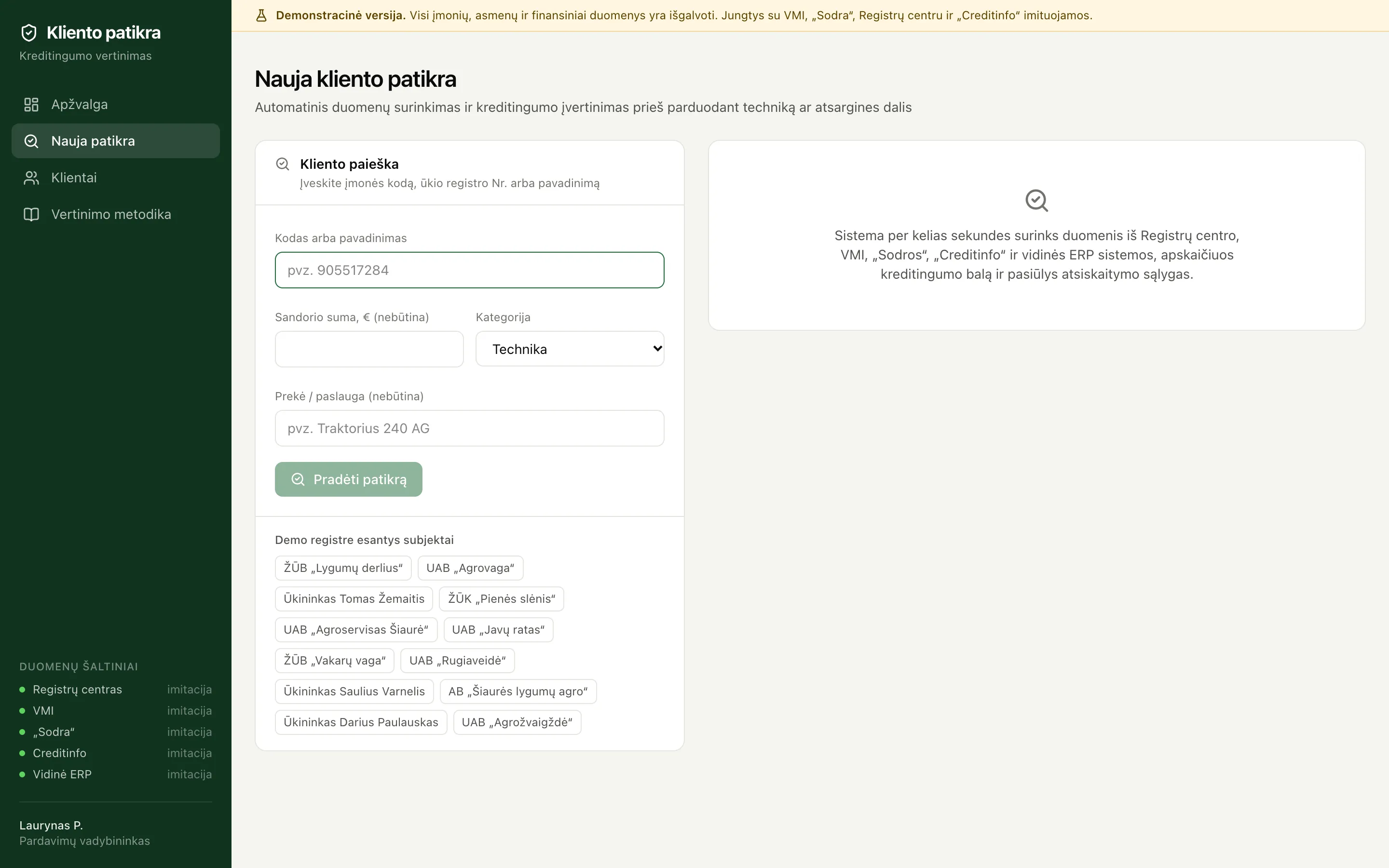
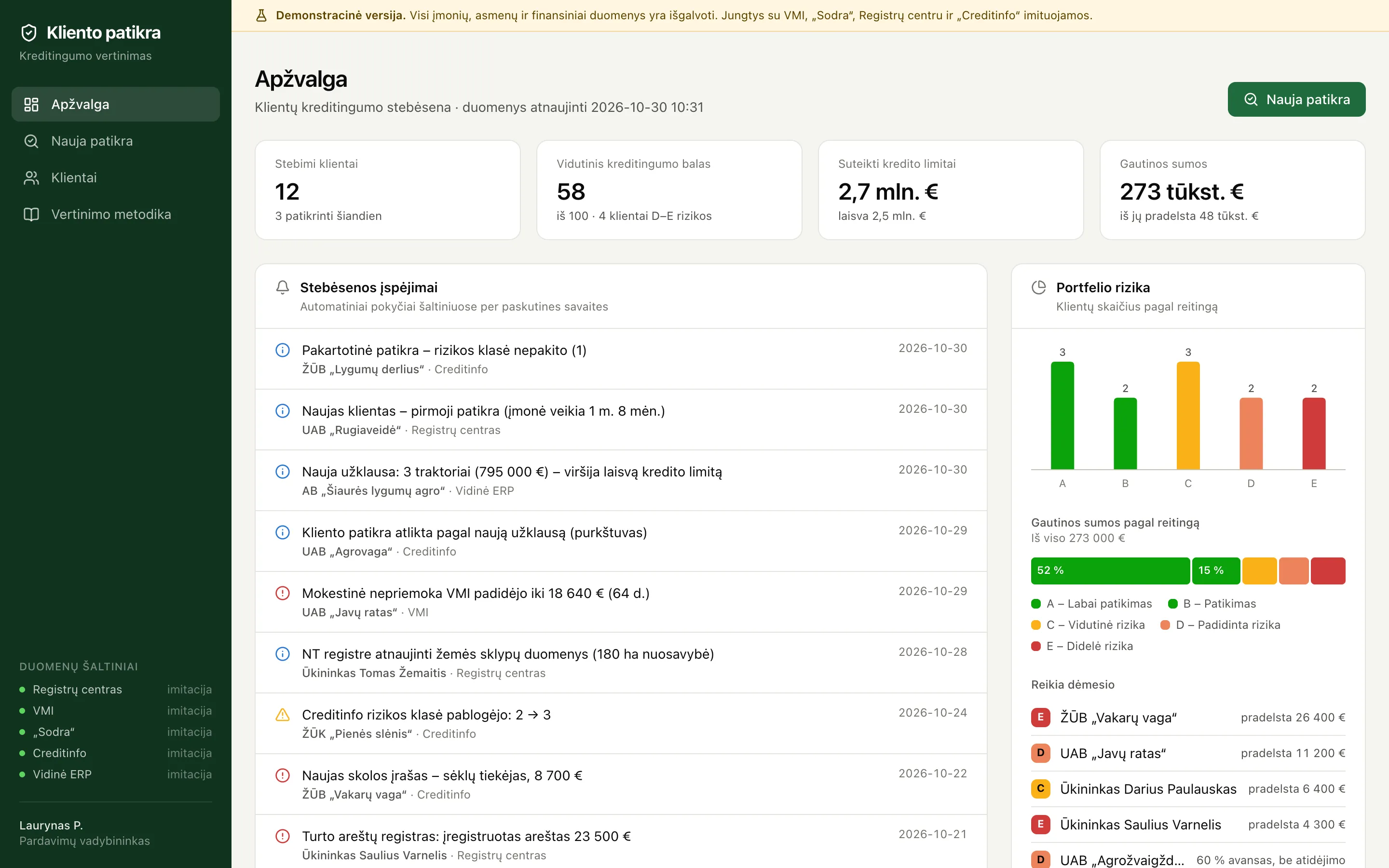
- One search, five sources. Enter a company code, farm register number or name. The system collects data from Registrų centras, VMI, Sodra, Creditinfo and the internal ERP.
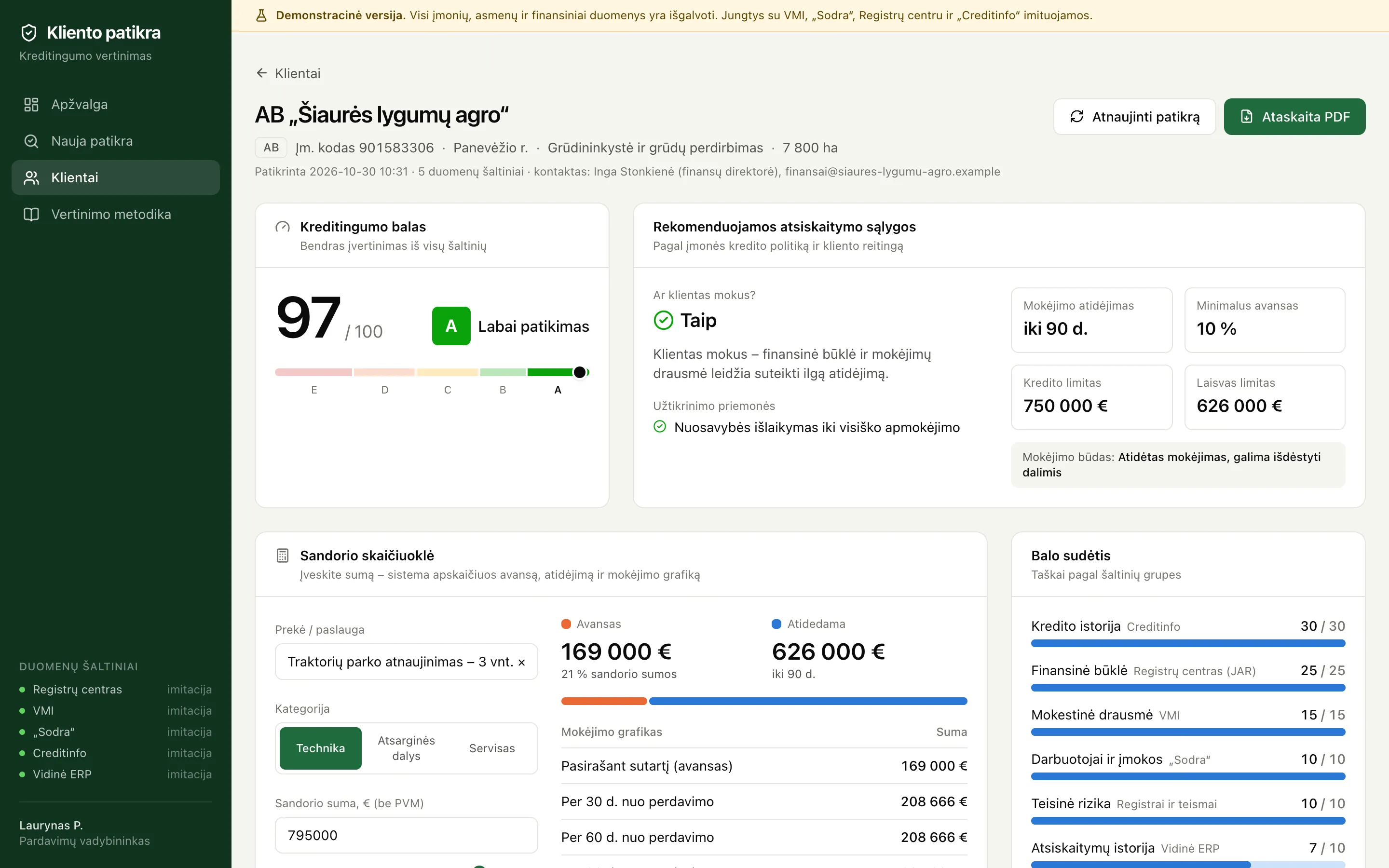
- A score you can explain. Every client gets a 0–100 creditworthiness score and an A–E rating, with a breakdown of where each point comes from.
- Payment terms for the deal. Based on the rating and free credit limit, it recommends the advance, deferral period, credit limit and collateral.
- Ongoing monitoring. It flags changes in the sources: new tax arrears, a worse Creditinfo risk class, an asset seizure or a request over the free limit.
- Reports in one click. Each client check can be exported as a PDF report.
How the score works
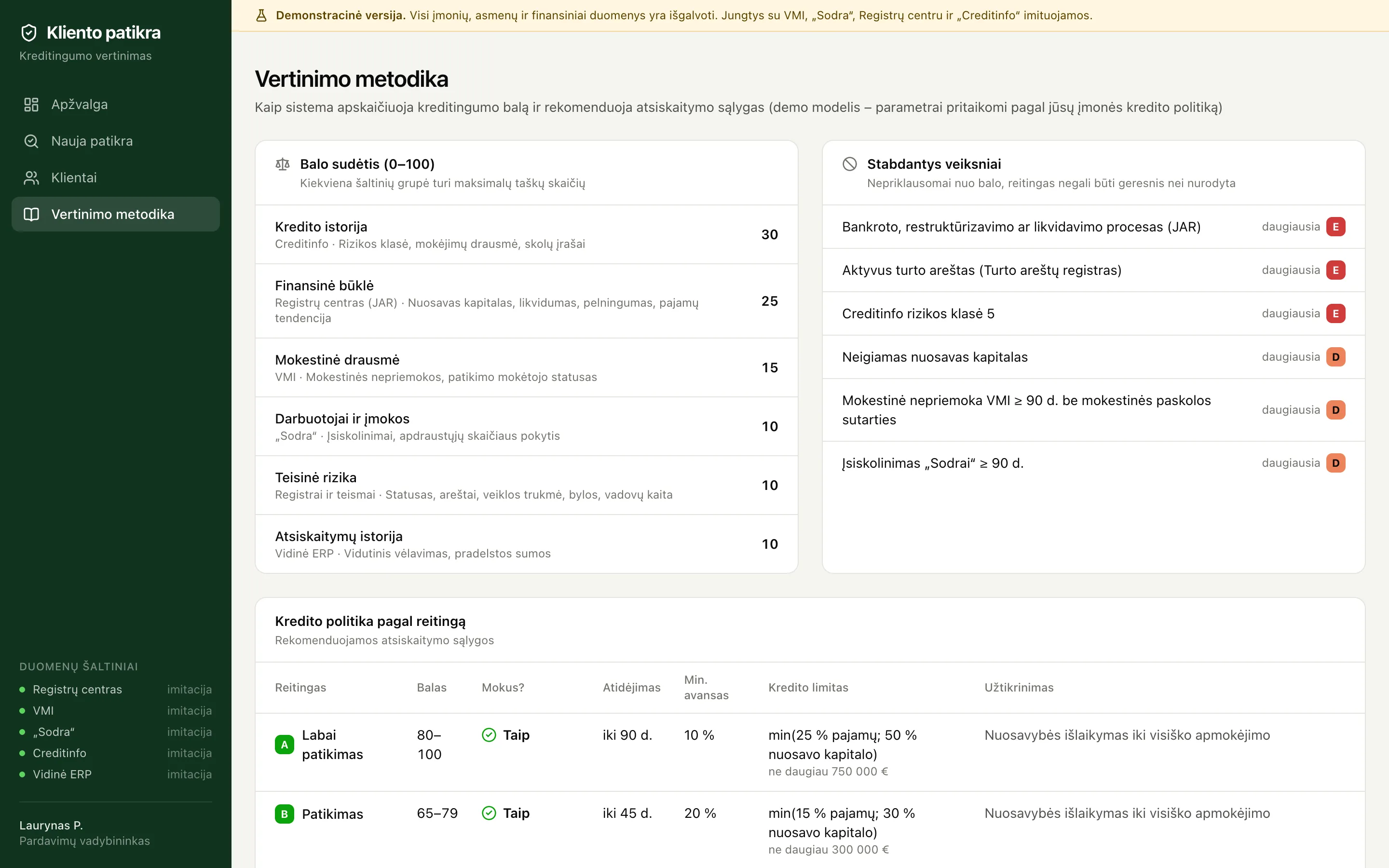
The score adds up six weighted groups: credit history (30), financial condition (25), tax discipline (15), employees and social security (10), legal risk (10) and internal payment history (10).
Knock-out rules override the score. Bankruptcy, an active asset seizure or Creditinfo risk class 5 limit the rating to E. Negative equity or tax or Sodra arrears over 90 days limit it to D. The weights, thresholds and payment terms follow your own credit policy.
Where it fits
The demo is set up for an agricultural machinery dealer. The same approach works for any company that sells to other businesses on credit: distributors, wholesalers, equipment suppliers and leasing.